
Keratoconus: The Eye Condition That Makes Your Vision Keep Changing
Do you keep getting new glasses, yet your vision never feels quite right? Do streetlights look smeared at night, or do straight lines look a little wavy? These can be signs of keratoconus, an eye condition that many people in the Philippines have never heard of. This World Keratoconus Day (November 10), the team at Soliman Paroli Optical and Soliman Paroli Eye Center would like to explain what it is and when it is time to get your eyes checked.
What is keratoconus?
The cornea is the clear, dome-shaped "window" at the front of your eye, and it helps focus light. In keratoconus, the cornea becomes thinner and bulges outward like a cone. That changes how light enters the eye, so vision becomes blurry and distorted, which can make reading or driving harder (AAO).
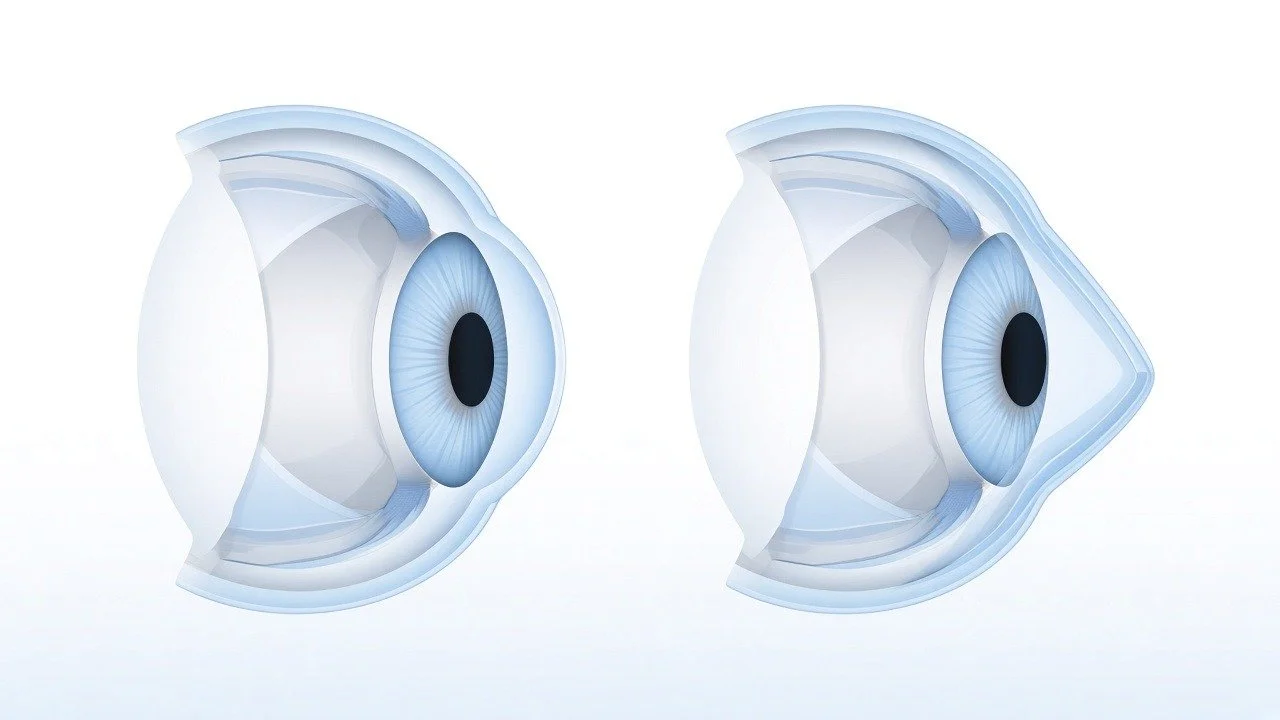
Nobody knows exactly why it happens. Family history, eye allergies and heavy eye rubbing are all linked to it (AAO). It is also hard to say how common keratoconus is. The National Keratoconus Foundation says its true frequency is not known, but it is found all over the world (NKCF).
Signs of keratoconus to watch for
Keratoconus often begins in the late teens or early twenties and can slowly worsen over 10 to 20 years. It usually affects both eyes, and one eye can be worse than the other (AAO). It can start at any age, though (NKCF).
Early on, you may notice:
- Mild blurring of vision
- Straight lines that look bent or wavy
- More sensitivity to light and glare
Later, vision may become more blurred and distorted, and your nearsightedness or astigmatism may increase. That can mean needing new glasses again and again (AAO). Other signs include halos or "ghosting" around lights at night, eye strain and headaches (NKCF). Because the cornea's shape is uneven, some people find their vision cannot be fully corrected with glasses (MedlinePlus).
Sudden changes need quick attention. In some people the cornea can swell suddenly, causing a sudden drop or clouding of vision and sometimes scarring (Mayo Clinic). If that happens, do not wait for your next routine visit.
When should you get your eyes checked?
Book an eye exam if:
- Your glasses prescription keeps changing, or new glasses still do not look sharp
- You have blur, ghosting or glare that glasses do not fix
- Vision is getting worse quickly
- You have a close relative with keratoconus
Some people have a higher chance of developing keratoconus. A global panel of corneal experts, the Global Consensus on Keratoconus and Ectatic Diseases, listed these risk factors: Down syndrome, relatives with keratoconus, eye allergy, eye rubbing, atopy (a tendency toward allergies), certain connective tissue disorders, and Asian or Arabian ethnic background (Review of Optometry summary). If you have any of these, regular checks are a good idea.
For families, MedlinePlus suggests parents who have keratoconus should consider having their children screened starting at age 10 (MedlinePlus). Children may also be more advanced at diagnosis and may progress faster, so close follow-up matters (EyeWiki).
What happens during an eye exam?
A routine eye exam can detect keratoconus. An ophthalmologist or optometrist examines the cornea and may measure its curvature or map its surface with a special computer (AAO). The American Optometric Association advises seeing a doctor of optometry regularly for corneal curvature measurements and tests for irregular astigmatism (AOA). If keratoconus is suspected, the experts recommend checking younger patients at shorter intervals to watch for change (Review of Optometry).
Can keratoconus be treated?
Yes, there are several options, and the right one depends on the stage and how fast it is changing. Early on, glasses or soft contact lenses may be enough. Later, special hard lenses such as rigid gas permeable and scleral lenses can give clearer vision (Mayo Clinic). Contact lenses help you see better, but they do not stop the cornea from changing (Review of Optometry).
To slow or stop progression, an ophthalmologist may recommend corneal cross-linking, which uses riboflavin drops and ultraviolet light to strengthen the cornea. Severe cases with scarring may need a corneal transplant (Mayo Clinic). Also, people with keratoconus should not have LASIK (MedlinePlus), so tell your eye doctor about any history of vision changes before considering laser surgery.
Frequently asked questions
Is keratoconus the same as nearsightedness or astigmatism? No. It can cause nearsightedness and astigmatism, but it comes from a change in the cornea's shape, and the blur often cannot be fully fixed with glasses (AAO).
Does keratoconus lead to blindness? Keratoconus can seriously affect vision, but treatment options exist. MedlinePlus notes that in most cases vision can be corrected with rigid gas permeable contact lenses, and cross-linking or a transplant can be used when needed (MedlinePlus). Finding it early gives you more options.
Can I prevent it? There is no proven way to prevent keratoconus. Eye doctors advise controlling allergies and avoiding eye rubbing (MedlinePlus).
Is it painful? It is usually not painful, but you may have eye strain, irritation or headaches (NKCF).
Who treats it? An optometrist can examine your eyes, monitor changes and improve your vision with contact lenses, such as scleral, RGP and KeraSoft lenses. An ophthalmologist can do procedures like corneal cross-linking and, when needed, corneal transplant surgery.
Book a keratoconus eye exam in Pampanga
If your vision keeps changing, you do not have to guess. Book an eye exam at Soliman Paroli Optical – San Fernando, Pampanga (Unit 112, Fortune Square Building, McArthur Highway; (0915) 860 0555), Soliman Paroli Eyecare SM Clark or Soliman Paroli Eye Center at New Point Mall. Dr Mark Paroli fits specialty contact lenses for keratoconus, including scleral lenses, RGP lenses and KeraSoft lenses. Book an appointment here and mention if keratoconus runs in your family.
This article is for general information and is not a diagnosis. Only an eye care professional can examine your eyes and advise you.
Sources
- American Academy of Ophthalmology. What Is Keratoconus? https://www.aao.org/eye-health/diseases/what-is-keratoconus
- Mayo Clinic. Keratoconus: Symptoms and causes. https://www.mayoclinic.org/diseases-conditions/keratoconus/symptoms-causes/syc-20351352
- Mayo Clinic. Keratoconus: Diagnosis and treatment. https://www.mayoclinic.org/diseases-conditions/keratoconus/diagnosis-treatment/drc-20351357
- National Keratoconus Foundation. Understanding KC. https://nkcf.org/understanding-kc/
- MedlinePlus (US National Library of Medicine). Keratoconus. https://medlineplus.gov/ency/article/001013.htm
- American Optometric Association. Keratoconus. https://www.aoa.org/healthy-eyes/eye-and-vision-conditions/keratoconus
- AAO EyeWiki. Keratoconus. https://eyewiki.aao.org/Keratoconus
- Gomes JA, et al. Global Consensus on Keratoconus and Ectatic Diseases. Cornea. 2015;34(4):359-369. https://pubmed.ncbi.nlm.nih.gov/25738235/ (summarized by Review of Optometry: https://www.reviewofoptometry.com/article/finally-a-consensus-on-keratoconus)